


Testing Capabilities
Lab / Bench Testing Capabilities
Corrosion
A bench-scale circulating water system was designed and constructed for exposure of metal alloys to conditions of temperature, flow velocity, and water quality similar to those in a recirculating cooling water system.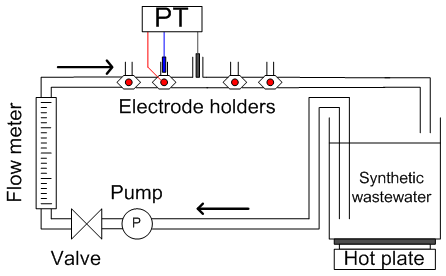
(A) bench-scale recirculating system.
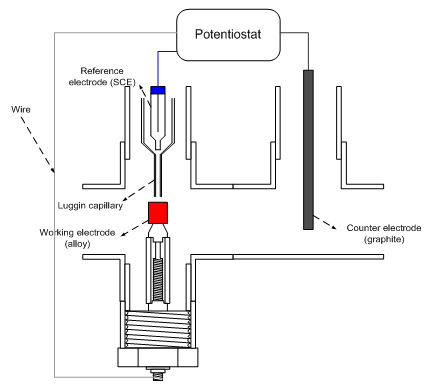
(B) detail of mild steel specimen holder and ports for counter electrode and reference electrode equipped in bench-scale recirculating system.
Corrosion measurements were performed using a combination of gravimetric weight loss and electrochemical polarization resistance measurements to determine average and instantaneous corrosion rates.
Scaling
A method to study scale formation tendency and kinetics for MWW and other impaired waters was developed in this study. Bench-scale water circulating systems similar to those employed in the corrosion studies were constructed and dedicated to investigate scaling phenomena.
Bench-scale water recirculating system with inserted stainless steel circular discs for scale collection and subsequent mass gain measurement.
Experiments spanning a range of values for these parameters were conducted to study the following:
• effect of concentration cycles
• influence of important water constituents
• effectiveness of different antiscalants
• interference of bio-control chemicals
Biofouling
The effectiveness of chloramine to control biofilm growth was also tested in a recirculating system that was designed to simulate temperature, flow velocity and water quality similar to those in a real recirculating cooling tower systems.
Schematic diagram of bench scale circulating system (left) and circular coupon with coupon holder for biofilm sampling.
Planktonic heterotrophic bacteria, total residual chlorine and monochloramine were monitored throughout the experiments in this system.

